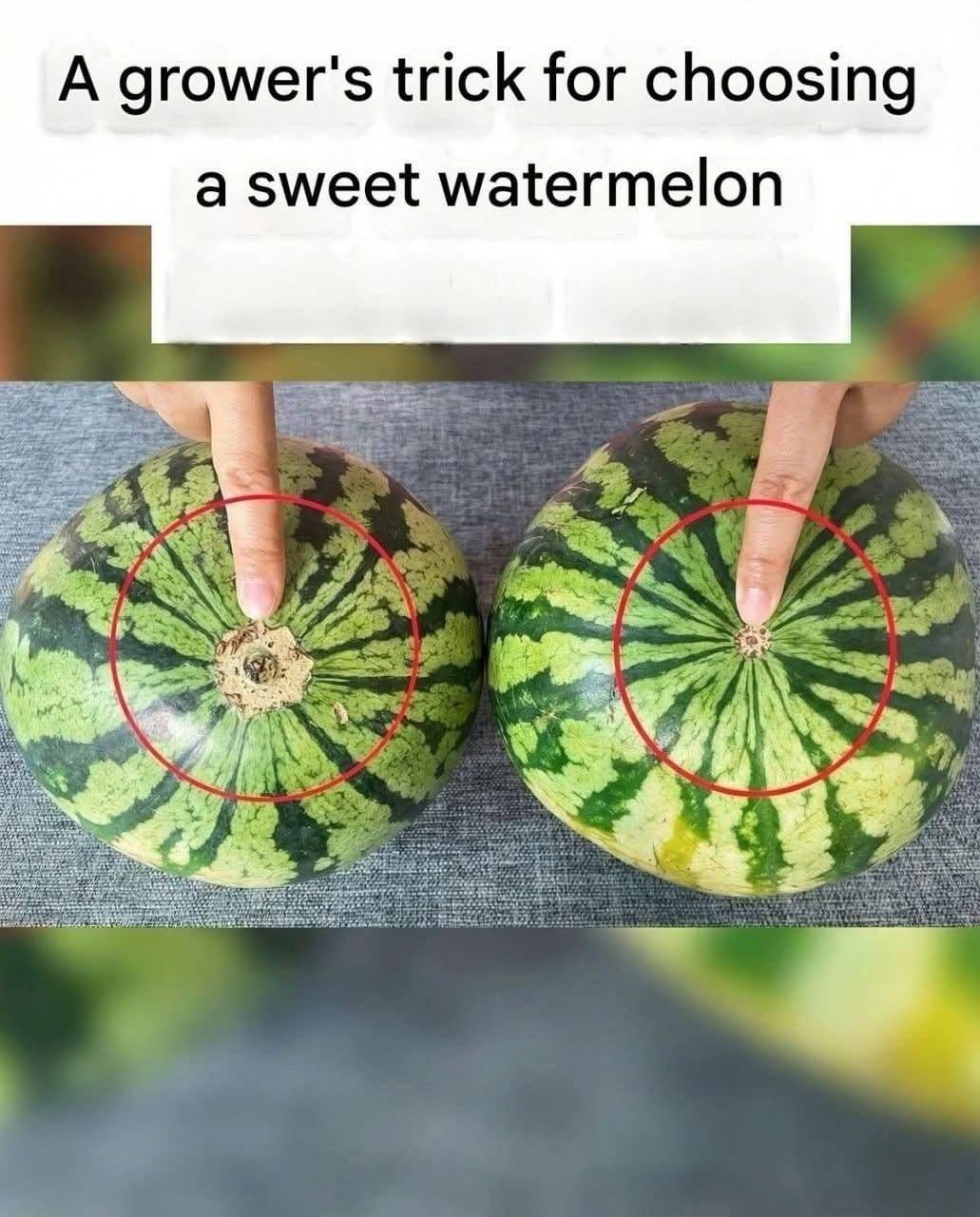
There is nothing quite like a refreshing, ice-cold watermelon to cool off during warm weather. However, picking a bland or watery melon is always a disappointment. By inspecting a few key visual indicators on the outside of the fruit, you can consistently select ripe, juicy, and naturally sweet watermelons at the market.
Visual Inspection Guide
| Feature | What to Look For (Ripe & Sweet) | What to Avoid (Unripe or Bland) | Why It Matters |
| Rind Color & Finish | Dull, dark green exterior | Shiny rind, grayish hue, or pale light green | A dull finish indicates full natural ripening on the vine. |
| Field Spot (Ground Patch) | Creamy yellow spot at the base | White spot or pale/absent patch | Shows the melon rested on the ground to ripen naturally in the field. |
| Marbling / Stripes | Dense, dark, and even marbling pattern | Sparse, faint, or broken marbling | Dense marbling correlates with higher sugar content and juiciness. |
| Navel (Belly Button) | Small, neat navel point | Unusually large navel | Smaller navels indicate a thinner rind and proper harvest timing. |
Botanical & Ripening Insights
-
Field Spot Development: The yellow field spot marks the exact surface area where the watermelon rested on the soil while maturing. A pale or white spot indicates the melon was harvested prematurely before its natural sugars could fully develop.
-
Exterior Shine & Sugar Accumulation: As watermelons reach peak ripeness, their outer skin loses its glossy sheen and turns matte or dull green. Shiny watermelons are almost always underripe.
-
Rind Thickness Indicator: The size of the flower-end navel correlates with rind thickness. A small navel signposts a thinner skin and more edible, sweet red flesh inside.
Step-by-Step Selection Process
For Complete Cooking STEPS Please Head On Over To Next Page Or Open button (>)