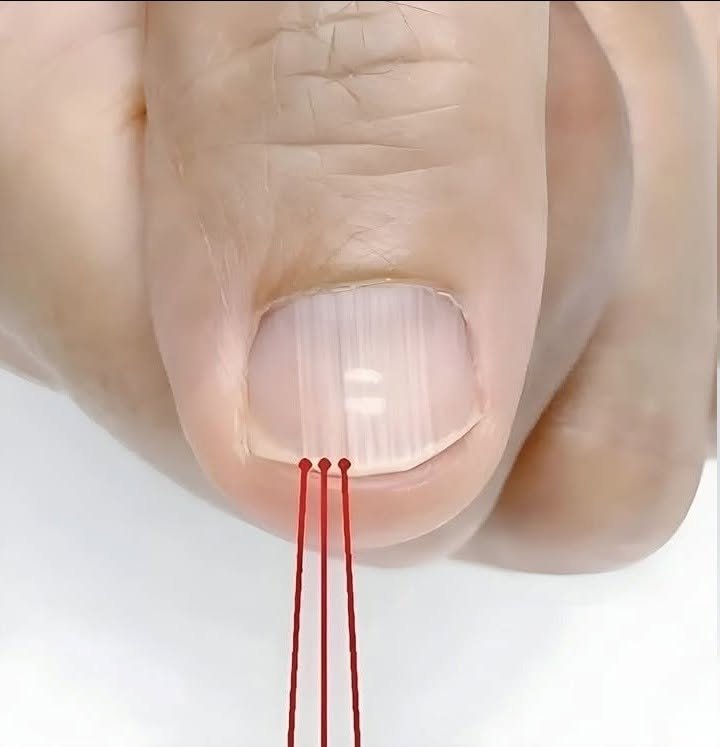
Have you ever looked closely at your fingernails and noticed thin vertical lines running from the cuticle to the tip? Perhaps your nails once looked smooth, but over time, you have started noticing ridges that seem more visible than before. If you are over 40, you might wonder whether these changes are simply part of getting older or whether your body is trying to tell you something important.
The good news is that vertical ridges on fingernails are often harmless. They are relatively common and can become more noticeable with age. However, nail changes can sometimes be associated with dryness, repeated minor injuries, skin conditions, or certain nutritional and medical problems.
Understanding the difference between ordinary age-related changes and symptoms that deserve attention can help you care for your nails and recognize when it may be worth speaking with a healthcare professional.
In this article, we will explore what causes vertical fingernail ridges, why they may become more noticeable after 40, which accompanying symptoms should not be ignored, and what you can do to keep your nails healthy.
What Are Vertical Ridges on Fingernails?
Vertical nail ridges are narrow lines or raised grooves that run lengthwise from the base of the nail toward its tip. They are also known as longitudinal nail ridges.
Some people have very fine ridges that are barely visible, while others develop more pronounced lines that can be felt when running a finger across the nail surface.
These ridges may appear on one nail or several nails at the same time. They can also become more noticeable when the nails are dry, brittle, or frequently exposed to water and cleaning products.
Unlike certain other nail abnormalities, vertical ridges do not automatically indicate an illness. For many people, they are simply a normal variation in nail texture.
The important thing is to pay attention to whether the ridges have always been present or have appeared suddenly, whether they are becoming progressively more pronounced, and whether other changes occur alongside them.
Why Do Vertical Nail Ridges Become More Noticeable After 40?
As we grow older, our bodies gradually change, and our nails are no exception.
Fingernails grow from a structure beneath the skin at the base of the nail called the nail matrix. This area produces the cells that form the hard nail plate.
Over time, changes in nail growth and the surrounding tissues can make the nail surface less uniformly smooth. The natural ridges that were once difficult to see may become more noticeable.
Several everyday factors can contribute to this appearance.
1. Natural Aging
One of the most common explanations for vertical ridges is the natural aging process.
As people get older, nails may grow more slowly, become drier, or develop changes in texture. The longitudinal lines that appear can resemble the fine ridges seen on the surface of certain other body tissues.
These changes are often harmless, particularly when they develop gradually and affect several nails in a similar way.
However, age alone should not be used to explain every nail abnormality. A sudden change, unusual discoloration, pain, or a new dark stripe deserves closer attention.
2. Dry Nails and Loss of Moisture
Dryness can make existing ridges appear deeper and more prominent.
Frequent handwashing, cold weather, household cleaning products, and repeated exposure to water can weaken the nail’s protective surface. When nails become dry, they may also split, peel, or break more easily.
People who regularly use alcohol-based sanitizers or harsh detergents may notice these changes more often.
Keeping the nails and surrounding skin moisturized can improve their appearance and reduce brittleness, although moisturizing will not necessarily eliminate natural ridges.
3. Repeated Minor Trauma
Everyday activities can affect nail growth without causing obvious pain.
Repeated pressure from typing, manual work, manicures, nail biting, or pushing back the cuticles may contribute to changes in nail texture.
The nail matrix is particularly important because damage to this area can influence how the nail grows. Even repeated minor irritation may become noticeable as the nail grows out.
Avoiding aggressive manicures and protecting your hands during household tasks can help reduce unnecessary damage.
Could Vertical Nail Ridges Be a Sign of a Nutritional Deficiency?
This is a common concern, especially when someone notices changes in their nails after middle age.
Nails require adequate nutrition to grow normally, and certain nutritional deficiencies can affect their appearance. However, vertical ridges alone are not a reliable way to diagnose a vitamin or mineral deficiency.
Iron Deficiency
Iron deficiency can affect the nails, but it is more classically associated with changes such as unusually thin, brittle, or spoon-shaped nails rather than ordinary vertical ridges.
Other symptoms may include fatigue, weakness, dizziness, or shortness of breath, although these symptoms can have many different causes.
If you have persistent tiredness along with unusual nail changes, a healthcare professional may recommend blood tests to check your iron levels and look for possible causes.
Do not begin taking iron supplements simply because you have nail ridges. Too much iron can be harmful, and supplementation should be based on an appropriate assessment.
Vitamin B12 and Other Nutrients
For Complete Cooking STEPS Please Head On Over To Next Page Or Open button (>)