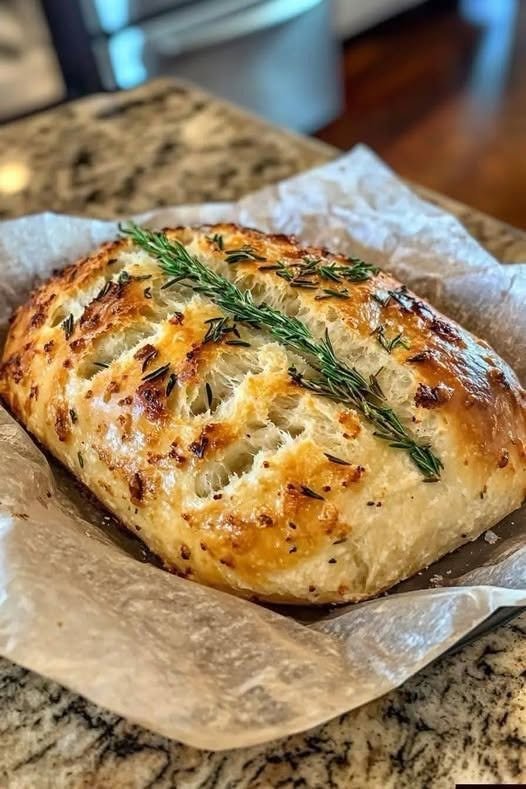
Step 1: Mix the Dough
In a large mixing bowl, combine the flour, salt, and instant yeast. Add the lukewarm water, olive oil, garlic, rosemary, and honey if using.
Stir with a wooden spoon until a sticky, rough dough forms. There is no need to knead it. Make sure there are no large pockets of dry flour remaining.
Step 2: Let the Dough Rise
Cover the bowl with plastic wrap or a clean kitchen towel. Leave it at room temperature for approximately 8–12 hours, or until the dough looks bubbly and has noticeably increased in size.
The exact rising time depends on your room temperature. A cooler kitchen may require more time.
Step 3: Shape the Dough
Lightly flour your work surface and gently transfer the dough onto it. With floured hands or a dough scraper, fold the edges toward the center to form a loose round loaf.
Place the dough seam-side down on a piece of parchment paper. Cover it and let it rest for another 30–45 minutes while the oven heats.
Step 4: Preheat the Oven
Place a Dutch oven with its lid inside the oven. Preheat to 450°F (230°C) for about 30 minutes.
Carefully handle the hot cookware, using oven mitts throughout this step.
Step 5: Bake the Bread
Carefully lower the dough, together with the parchment paper, into the hot Dutch oven. Cover with the lid and bake for 30 minutes.
Remove the lid and continue baking for another 10–15 minutes, until the crust is deeply golden and crisp.
Step 6: Cool Before Slicing
Carefully remove the bread from the Dutch oven and transfer it to a wire rack. Let it cool for at least 30–45 minutes before slicing.
This resting time helps the crumb finish setting and makes the bread easier to cut.
Tips for Perfect Rustic Bread
Measure the flour carefully: Too much flour can make the loaf dense. Weighing the flour gives the most consistent results.
Use fresh rosemary: Fresh rosemary provides a fragrant, earthy flavor. Chop it finely so it distributes evenly through the dough.
Don’t add too much garlic: Garlic has a strong flavor and can affect the dough’s moisture slightly. Start with two or three cloves.
Be patient with the rise: The long resting period helps develop flavor and texture without kneading.
Preheat the Dutch oven: A thoroughly heated pot helps the loaf develop a crisp crust.
Let it cool: Cutting into the bread too soon can make the inside seem gummy.
Variations to Try
Parmesan Rosemary Garlic Bread
Add 1/3 cup of finely grated Parmesan cheese to the dough for a savory, cheesy flavor.
Olive and Rosemary Bread
Fold in 1/3 cup of chopped, well-drained olives for a Mediterranean-inspired loaf.
Extra-Garlicky Bread
For a milder garlic flavor, use roasted garlic instead of raw minced garlic. Fold the softened roasted garlic into the dough before the first rise.
No Dutch Oven? No Problem
Bake the loaf on a preheated baking stone or heavy baking sheet. Place an oven-safe pan of hot water on a lower rack to create steam during the first part of baking. Do not pour water onto the oven floor or onto hot glass.
What to Serve with Rosemary Garlic Bread
This rustic loaf pairs wonderfully with tomato soup, creamy mushroom soup, pasta, roasted vegetables, fresh salads, or a cheese board. You can also toast slices and drizzle them with olive oil for a simple appetizer.
For an extra treat, serve warm slices with softened butter or dip them into olive oil mixed with herbs.
How to Store Homemade Bread
Allow the loaf to cool completely before storing. Keep it in a paper bag or bread box at room temperature for about 2 days for the best crust.
For longer storage, slice the cooled bread and freeze it in a sealed freezer-safe bag for up to 3 months. Toast or warm the slices straight from frozen.
Frequently Asked Questions
Can I make this bread without a Dutch oven?
Yes. A baking stone or heavy baking sheet can work. Adding steam to the oven during the initial baking period can help the crust develop, although the result may differ slightly from bread baked in a covered Dutch oven.
Can I use active dry yeast?
Yes. Active dry yeast can generally be used, but dissolving it in some of the lukewarm water first may help it activate. Follow the yeast package instructions.
Can I use dried rosemary?
Absolutely. Use about one teaspoon of dried rosemary in place of one tablespoon of fresh rosemary, adjusting to taste.
Why is my dough so sticky?
No-knead dough is meant to be sticky and soft. Use lightly floured hands or a dough scraper when shaping it, but avoid adding too much extra flour.
Final Thoughts
This No-Knead Rustic Rosemary Garlic Bread is a simple and rewarding way to enjoy homemade bread without the work of traditional kneading. With its crisp golden crust, soft interior, and aromatic garlic and rosemary flavor, it’s a delicious addition to almost any meal.
For Complete Cooking STEPS Please Head On Over To Next Page Or Open button (>)