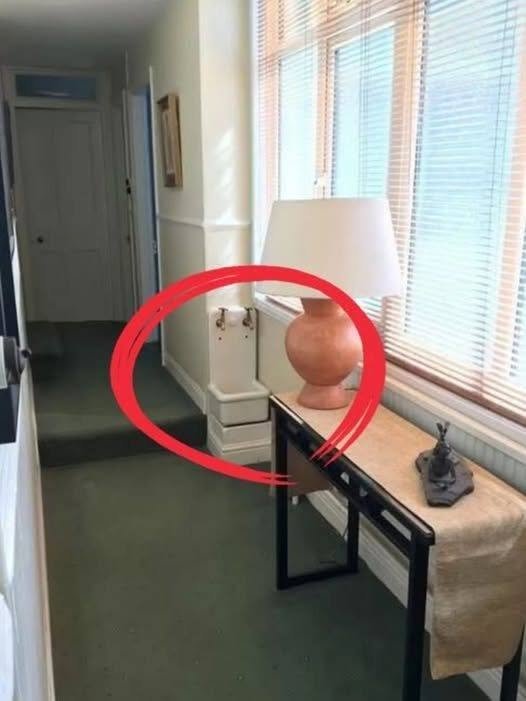
Modern houses frequently prioritize open layouts, streamlined finishes, and flexible furniture arrangements. Older properties, on the other hand, may contain built-in cabinets, recessed shelves, decorative moldings, and small storage compartments.
These features were often designed to fit the room precisely, making use of corners and narrow spaces that might otherwise be wasted.
Although some of these details may seem outdated, they can add character and functionality to a home.
4. Smart Ways to Repurpose a Small Hallway Cabinet
If you have a similar cabinet in your own home, there are several ways to make it useful without undertaking an expensive renovation.
Create a mini organization station. Use small baskets or dividers to organize keys, envelopes, pens, and other frequently used items.
Turn it into a decorative display. Place a small plant, framed photograph, or tasteful ornament on the countertop to make the hallway feel more welcoming.
Use it for household essentials. Store items such as spare batteries, flashlights, or other small supplies, provided the cabinet is suitable for that purpose.
Create a compact reading corner. If the surrounding space allows, use the countertop for a small lamp and a few favorite books.
Refresh the finish. A fresh coat of paint, updated hardware, or carefully chosen accessories can help an old cabinet complement a more modern interior.
5. How to Make a Narrow Hallway Feel Bigger
A small hallway can feel cramped when too many objects compete for attention. Fortunately, a few simple design choices can make the space feel more open.
- Choose slim furniture that does not obstruct the walking path.
- Use light, neutral colors to reflect natural light.
- Keep countertops relatively clear of clutter.
- Add a mirror to create a greater sense of depth.
- Use wall-mounted storage where appropriate.
- Keep window coverings simple so natural light can enter the room.
The goal is to balance functionality with an uncluttered appearance.
6. Think Twice Before Removing Built-In Features
It can be tempting to remove an unusual cabinet during a renovation, especially when it appears old-fashioned or inconvenient. However, built-in features can sometimes provide useful storage or contribute to the character of an older property.
Before removing one, consider whether it can be repaired, repainted, or adapted to suit your current needs.
If the cabinet appears damaged or is integrated into the wall, inspect its construction before making changes. Some older features may conceal wiring, plumbing, or other building elements that require professional attention.
Final Thoughts
Small details can reveal a great deal about the way homes were designed in the past. A seemingly awkward hallway cabinet may be a practical storage feature, a custom architectural detail, or simply a reminder of how differently people used their living spaces.
With a little creativity, even an overlooked corner can become a useful and attractive part of your home.
For Complete Cooking STEPS Please Head On Over To Next Page Or Open button (>)