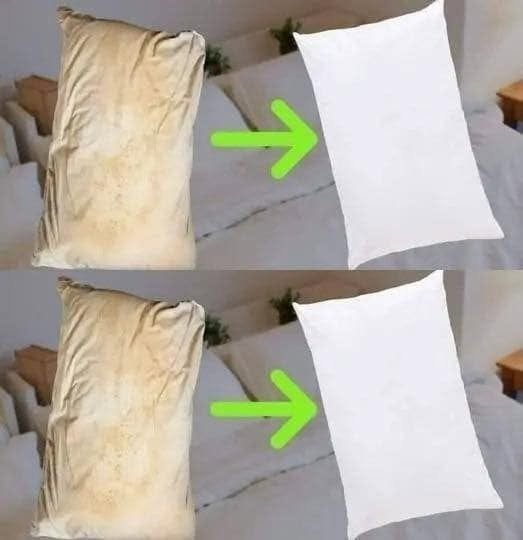
If your pillow has yellow marks or small stains, treat the affected area before washing, when the material allows it.
- Mix a small amount of mild laundry detergent with water.
- Apply a little of the solution to the stained fabric.
- Gently dab the area with a clean cloth rather than scrubbing aggressively.
- Follow the care label for rinsing or proceeding with a full wash.
Test the cleaning solution on an inconspicuous area if you are unsure how the fabric will react.
For stubborn stains, use a stain remover specifically labeled as suitable for the pillow’s fabric. Avoid combining different cleaning products, as some combinations can release dangerous fumes.
Step 3: Wash Machine-Washable Pillows
If the care label allows machine washing, use the recommended cycle and water temperature.
- Remove the pillowcase and any protective cover.
- Check the pillow for tears or damaged seams.
- Use the recommended amount of mild laundry detergent.
- Select the appropriate wash cycle and temperature.
- Add an extra rinse only if the manufacturer’s instructions permit it and detergent residue remains a concern.
- Remove the pillow promptly when the cycle finishes.
Avoid using excessive detergent. Too much soap can leave residue inside the filling and may make rinsing more difficult.
If you are washing more than one pillow, make sure the machine is not overloaded. Follow the washer manufacturer’s load instructions so the pillows can move freely.
Step 4: Can Baking Soda Help?
Baking soda is commonly used around the home to help absorb certain odors. It may be useful for some washable fabrics, but it is not a guaranteed stain remover or disinfectant.
If you want to use it, first check that the pillow and its care instructions are compatible with the proposed method. Use a small amount only where appropriate, and make sure any residue is removed.
Do not assume that adding more baking soda will make the pillow whiter. For routine pillow cleaning, the correct detergent, proper rinsing, and complete drying are more important.
Safety tip: Never mix chlorine bleach with vinegar, ammonia, or other cleaning products. Dangerous gases can form. If you choose a fabric-safe whitening product, follow its label and never combine it with another cleaner.
Step 5: Dry the Pillow Completely
Drying is one of the most important parts of cleaning a pillow. A pillow that remains damp inside can develop a musty odor and may encourage mold growth.
For pillows that are dryer-safe:
- Follow the care label for the permitted heat setting.
- Avoid excessive heat that could damage the filling or fabric.
- Check the pillow periodically and reposition it if necessary.
- Continue drying until the entire pillow, including the center, is completely dry.
If air-drying is recommended, place the pillow in a well-ventilated area and follow the manufacturer’s instructions. Allow plenty of time for the filling to dry throughout.
Do not put a damp pillow back into its pillowcase or onto the bed. The outside may feel dry while moisture remains trapped inside.
Step 6: Help Your Pillows Smell Fresh
A clean, completely dry pillow should smell fresher without needing a strong fragrance.
To keep pillows smelling pleasant:
- Wash pillowcases regularly.
- Make sure hair and skin products are not accumulating excessively on the fabric.
- Allow the bed to air out when practical.
- Keep pillows away from damp storage areas.
- Store spare pillows only when they are clean and fully dry.
- Replace pillows that retain a persistent musty smell despite appropriate cleaning.
Avoid spraying large amounts of perfume or room fragrance onto pillows. These products may irritate sensitive skin and will not solve a moisture problem inside the filling.
If a pillow smells musty after drying, inspect it carefully. If you suspect mold or cannot get it completely dry, replacing it may be the safer option.
Step 7: Keep Pillows Cleaner for Longer
Once your pillows are clean, a few simple habits can help prevent stains and odors from returning quickly.
Use washable pillow protectors. A suitable protector adds another layer between the pillow and everyday sweat or oils.
Wash pillowcases frequently. Follow the fabric’s washing instructions and change them regularly.
Follow the pillow’s care schedule. Some pillows tolerate washing, while others require spot cleaning or professional care. Clean them as directed rather than using the same method for every pillow.
Let moisture escape. Avoid making the bed in a way that traps dampness against the pillow immediately after sleeping in a warm or humid environment.
Inspect pillows regularly. Flattened filling, damaged seams, persistent odors, and stains that cannot be removed may indicate that it is time for a replacement.
Common Mistakes to Avoid When Cleaning Pillows
Even a simple laundry task can cause damage if the wrong method is used.
- Ignoring the care label: Heat, water, or agitation may damage certain fillings.
- Using too much detergent: Excess soap can remain trapped in the pillow.
- Adding bleach without checking compatibility: Bleach may damage fabric or filling and should only be used when the manufacturer permits it.
- Mixing cleaning chemicals: Never mix bleach with vinegar, ammonia, or other cleaners.
- Using excessive dryer heat: High temperatures can damage some pillow materials.
- Putting a damp pillow back on the bed: Trapped moisture can cause musty odors.
- Machine-washing memory foam: This can damage the foam and may prevent it from drying properly.
Choosing the correct cleaning method is more effective than relying on a single homemade cleaning trick.
Frequently Asked Questions
Can yellow pillows become white again?
Sometimes. Washing may reduce yellowing caused by sweat and body oils, but older or deeply set stains may remain. The result depends on the fabric, filling, age of the stain, and cleaning method.
Is baking soda enough to clean a pillow?
No. Baking soda may help with some odors, but it does not replace appropriate washing or care instructions. It is not a reliable disinfectant and will not necessarily remove yellow stains.
How often should bed pillows be washed?
There is no single schedule that suits every pillow. Follow the manufacturer’s care instructions and clean washable pillows when needed. Pillowcases and protectors generally need more frequent laundering than the pillows themselves.
Can I put every pillow in the washing machine?
No. Many synthetic-fill and some down or feather pillows are washable, but memory foam, latex, and specialty pillows often require different care. Always check the label first.
Why does my pillow smell bad after washing?
The pillow may not have dried completely, detergent residue may remain, or the odor may be coming from the filling itself. Follow the recommended drying method and inspect the pillow. Replace it if a persistent musty smell remains or you suspect mold.
Final Thoughts
Cleaning dirty bed pillows can help reduce everyday residue, improve freshness, and make your bedding more pleasant. You do not need a complicated homemade formula to get started: use a suitable detergent, follow the manufacturer’s care instructions, treat stains carefully, and dry washable pillows completely.
Remember that not every yellow stain will disappear, and not every pillow can be washed in the same way. With proper care and regular maintenance, you can help your pillows stay cleaner, fresher, and comfortable for longer.
For Complete Cooking STEPS Please Head On Over To Next Page Or Open button (>)